
Got an email from Substack this morning.
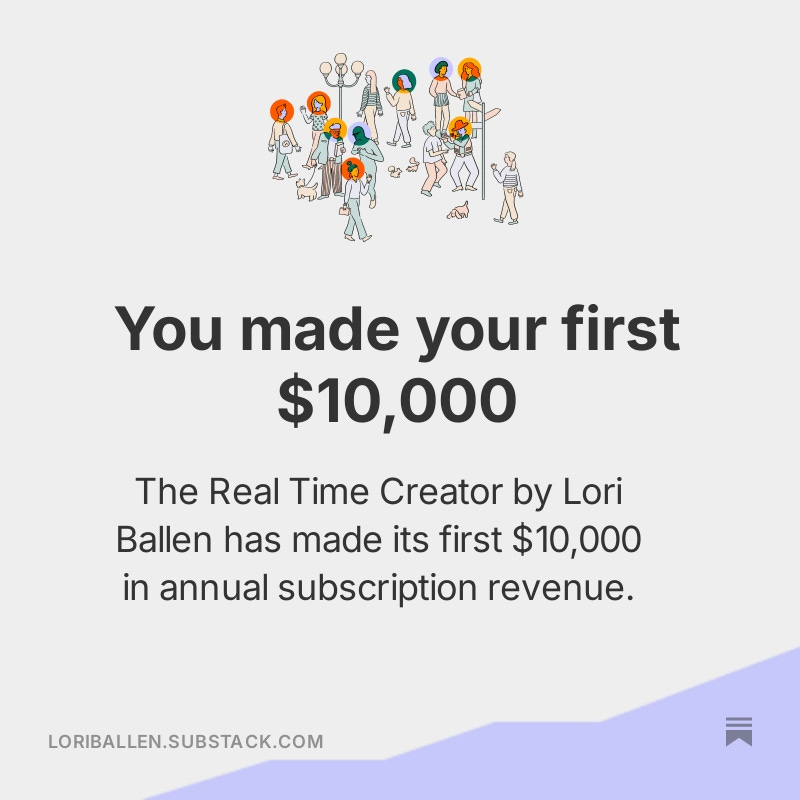
I put a little banner up on my Facebook. People keep commenting: how do I learn that?
Here’s what’s funny. Four months ago, Substack wasn’t even on my income statements.
I’ve been making money online for 30 years. Blogging since AOL said “you’ve got mail.” Six-figure affiliate marketing. YouTube. Pinterest. Amazon Influencer. TikTok Shop. There are eight or nine income streams I teach in my group coaching program at Ballen Academy.
Substack slipped in because my coaching clients wouldn’t stop talking about it.
I rolled my eyes. I always do at first.
I didn’t announce my Substack to anyone when I started.
Not YouTube. Not Facebook. Not my email list.
I stayed invisible on purpose. I wanted clean, organic data. I wanted to test the algorithm without polluting the results with the audience I already had.
Here’s what I found.
Substack has a For You page.
Nobody is talking about this. And it is the whole game.
The same way YouTube surfaces your content to non-subscribers. The same way TikTok built an empire on discovery. Substack does this too. Your notes get served to people who have never heard of you. If the algorithm decides they’d be interested, it shows them your content.
I started posting three to four notes per day. Short. 250 characters or so. One thought. One takeaway. A sentence per line with white space.
Six weeks in, people I’d never met were following me. YouTube subscribers were finding me through Substack — not because I linked my channel anywhere, but because the platform figured out we were already connected.
Now I get comments: Lori, I follow you on YouTube. I’m so glad you’re here.
I haven’t sent a single promotional email outside of Substack (yet!).
Your niche is not a what. It’s a who.
I spent years telling coaching clients to niche down. Get specific. Box turtles, not small pets. Real estate agents, not “entrepreneurs.”
On Substack, the niche thing looks different.
It’s not about the topic. It’s about the person you’re writing for — and whether every single thing you publish lands for that same person.
My notes are all about making money online. About transformation. Starting over, switching careers, going from running a team to sitting at a desk in a tiny apartment and figuring out what comes next.
When I write an article, I ask: would the people who followed me because of my notes want this?
If the answer is no, I don’t write it.
Sourdough recipe? Pass. Even if my over-50 women followers might love it — that’s not why they’re here. They’re here because they want a storyteller who gives them something actionable on the other side of the story.
Write off-brand once. You lose subscribers. The algorithm notices both.
Four months in. $10,000 in annualized income. Eight more paid subscribers away from the Substack bestseller list.
I started at $8/month. Moved to $10. I can see $15 coming.
This wasn’t on my bingo card.
Below, I’m breaking down the exact system — the note formula, where the paywall goes and why, how I’m pricing, and the three growth levers I pull once the basics are running.
This is the part I only share with paid subscribers.


